Wisdom Teeth Removal: Complete Guide to Surgery, Recovery, Pain, Costs, and Aftercare
Four of your teeth usually arrive after everything else is settled, in a mouth that has often run out of room. For many people they come in without trouble. For others they stay trapped under the gum, trap food, and damage the molar in front. This guide explains how dentists decide which situation you are in, what removal involves, what recovery is realistically like, and where the evidence is still unsettled.
What are wisdom teeth?
Wisdom teeth are the third molars, the last teeth in each corner of the mouth. Most people have four, two upper and two lower. They are the last permanent teeth to develop, which is where the name comes from: they arrive in early adulthood, supposedly when a person has gained some wisdom (AAOMS).
Not everyone has all four. A research protocol commissioned by the UK’s National Institute for Health Research notes that about 15–20% of people never develop at least one of them (NIHR HTA protocol). Some people have fewer than four, and a few have none.
Dentists describe a wisdom tooth by how far it has come through the gum:
- Fully erupted: the tooth is through the gum and meets the opposing tooth. It can be cleaned like any other molar.
- Partially erupted: only some of the crown has appeared. The flap of gum left over the rest creates a pocket where food and bacteria collect.
- Impacted: the tooth is blocked from coming through properly by the neighbouring tooth, bone or gum.
When do wisdom teeth come in?
AAOMS patient material says wisdom teeth come in between about 17 and 25 (AAOMS patient guide); NICE’s scoping document for its review gives 18 to 24 (NICE scope). Timing varies with jaw growth, how much space there is, and the angle at which the tooth develops. A tooth can also stay beneath the gum indefinitely, and some are only discovered on an X-ray taken for another reason.
Eruption can happen later than 25, but a wisdom tooth that is going to cause trouble often does so in the years after it begins to emerge. When one is on its way, the signs are usually local: tenderness or a dull ache at the back of the jaw, a gum that looks red or swollen over the area, and occasional discomfort when chewing. These symptoms overlap with early infection, so they are a reason for an examination, not a diagnosis.
Why wisdom teeth are removed
Wisdom teeth do not need to come out simply because they exist. The NHS says a wisdom tooth is usually removed when it causes problems, and that a tooth causing none is normally left alone and checked at routine appointments (NHS). AAOMS describes removal as appropriate where there is pathology: infection, cavities that cannot be restored, cysts, tumours, or damage to adjacent teeth (AAOMS). In practice, the reasons are these:
- Impaction that is causing symptoms or is associated with disease (covered below).
- Repeated pericoronitis. This is infection and inflammation of the gum flap over a partly erupted tooth. One mild episode may settle with cleaning and antiseptic rinses; recurrent episodes are a common trigger for extraction.
- Decay that cannot be predictably restored, in the wisdom tooth or in the second molar in front of it. Food packing between the two is the usual cause.
- Gum disease or bone loss around the wisdom tooth.
- Damage to the second molar, where an angled tooth presses on it or leaves a surface that cannot be cleaned.
- Cysts or other pathology. A fluid-filled sac can form around a tooth that has not erupted.
- Recurrent pain or swelling traced to the tooth.
- Treatment planning. Occasionally a wisdom tooth is removed because it is in the way of orthodontic or jaw surgery, or because of other clinical circumstances. This is a decision for the treating clinician, not a routine indication.
Signs and symptoms of problematic wisdom teeth
Problem wisdom teeth tend to announce themselves through the gum around them. Typical complaints are pain at the back of the mouth, red or swollen gum, tenderness in the jaw, a bad taste or bad breath from trapped food or infection, pain on chewing, and difficulty opening the mouth fully. More obvious infection brings swelling along the jaw or cheek, and sometimes fever. Mayo Clinic’s list of reasons to consider removal includes trapped food and debris, infection or gum disease, decay in a partly erupted tooth, and damage to a nearby tooth or the surrounding bone (Mayo Clinic).
Symptoms alone cannot tell you what is wrong. A sore jaw may be a wisdom tooth, a cracked molar, a sinus problem or a jaw-joint complaint. And the absence of symptoms does not prove a tooth is healthy: AAOMS makes the point that being pain-free is not the same as being disease-free (AAOMS). Only an examination and usually an X-ray can sort these out.
Some symptoms should not wait for a routine appointment. See When to contact your dentist or seek emergency care for the list.
What are impacted wisdom teeth?
A tooth is impacted when it cannot come through the gum into its normal position. AAOMS patient material states that nine out of ten people have at least one impacted wisdom tooth (AAOMS patient guide). Impaction is described in two ways: how deeply the tooth is covered, and which way it points.
By depth
- Soft-tissue impaction: the crown is covered only by gum.
- Partial bony impaction: part of the crown has come through the gum, while the rest is held in bone.
- Complete bony impaction: the tooth sits entirely within the jawbone.
By angle
- Vertical: upright but blocked, usually by lack of space.
- Mesioangular: tilted forward against the second molar, which makes a trap for food and plaque and can raise the risk of decay in that tooth.
- Distoangular: tilted backward, away from the second molar.
- Horizontal: lying on its side, usually pushing against the second molar.
Complexity follows depth and angle. A soft-tissue impaction may need little more than opening the gum. A deeply buried or horizontal tooth usually needs bone removal and sectioning. Proximity to the nerve in the lower jaw adds a further layer of planning (see nerve damage).
Do you really need wisdom teeth removal?
For a diseased wisdom tooth, professional bodies agree that removal is appropriate. The disagreement is about healthy ones, and it is real.
The UK’s NICE guidance from 2000 recommended that routine removal of impacted wisdom teeth with no disease should stop in the NHS (NICE TA1). A Cochrane review concluded there was insufficient evidence either to support or to refute removal of symptom-free impacted wisdom teeth in adults (Mettes et al., Cochrane), and a 2020 NIHR Health Technology Assessment found four clinical studies, none giving strong evidence for or against preventive removal (Hounsome et al., 2020).
AAOMS takes a more interventionist line. It cites a long-term follow-up study indicating that the risk of disease requiring removal in symptom-free patients who keep their wisdom teeth exceeds 70% after 18 years, and it notes that surgery gets harder and recovery slower with age (AAOMS). Mayo Clinic says dental specialists disagree about removing impacted teeth that cause no problems, with many recommending it (Mayo Clinic).
The practical conclusion is that there is no universal rule. A sensible recommendation rests on a clinical examination, an X-ray, the angle and depth of the tooth, the state of the gum and the neighbouring molar, your age, your general health, and your own preference after hearing the risks of each path. Be wary of a blanket recommendation to remove all four, and equally wary of the assumption that a quiet tooth will stay quiet.
How dentists diagnose wisdom teeth problems
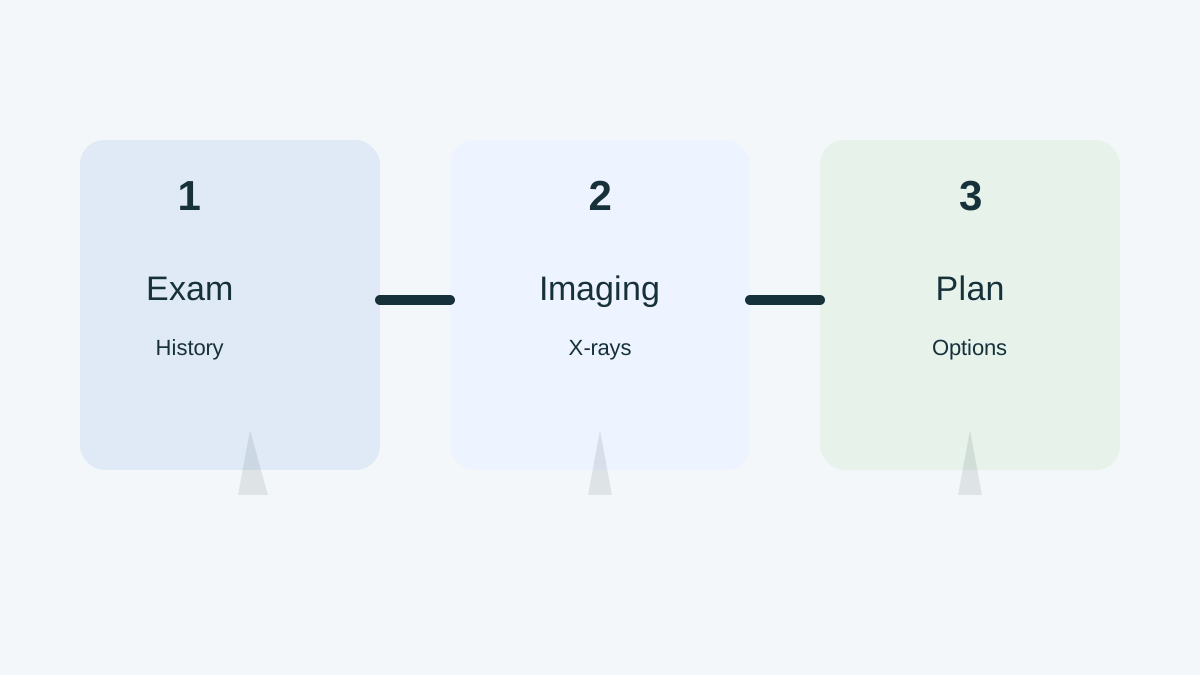
The examination looks at the gum over and around the tooth for redness, swelling or pus; at the second molar for decay or gum pockets; at how the upper and lower teeth meet; and at how widely you can open. The NHS notes that a dentist may take X-rays to check how the teeth are positioned (NHS).
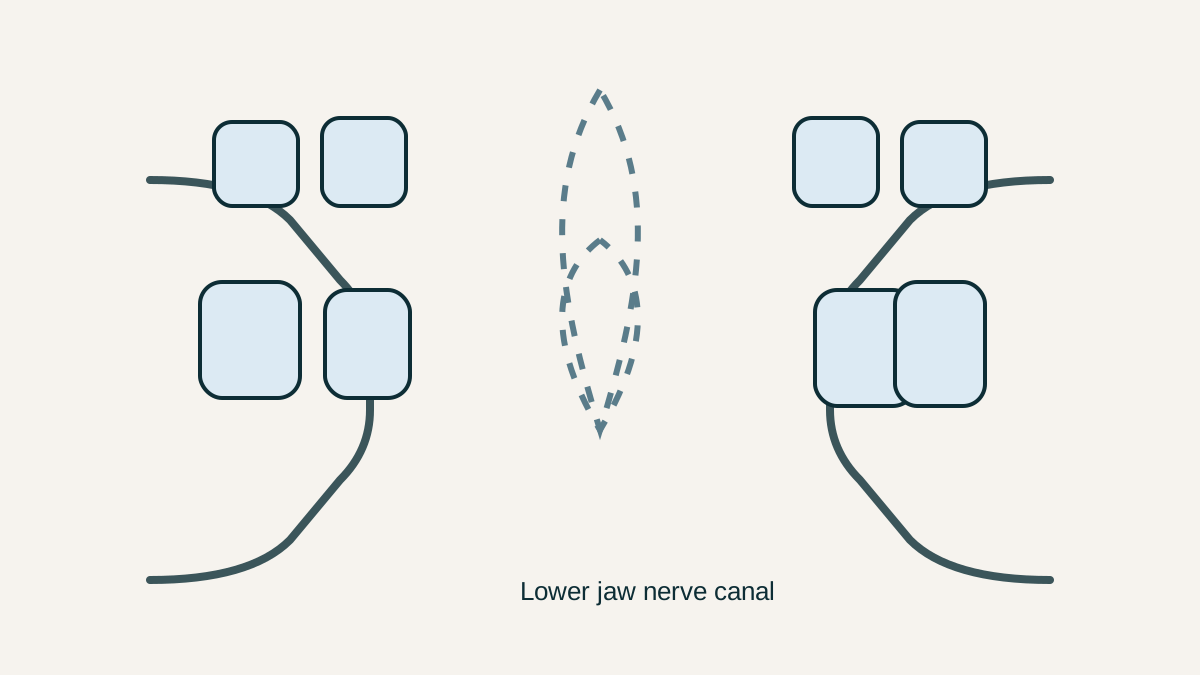
A panoramic radiograph shows all four wisdom teeth, their angle, their depth, and roughly where the nerve canal in the lower jaw runs relative to the roots. If the picture suggests the roots are in close contact with that canal, or the tooth is in an unusual position, the surgeon may request more detail. Cone-beam computed tomography (CBCT) provides a three-dimensional view and is generally reserved for those cases rather than used for every patient, because it involves more radiation than a panoramic image and is only justified when it will change the plan. The extra image can alter the approach, for example by pointing toward a coronectomy (see nerve damage).
How to prepare for wisdom teeth removal
Preparation starts at the consultation, where the surgeon should go through:
- Medical history, including heart, bleeding or immune conditions that may change the plan.
- Every medicine you take, including blood thinners, supplements and anything bought over the counter.
- Allergies, and any earlier reaction to anesthesia or sedation.
- Smoking and vaping. These slow healing and raise the risk of dry socket, so ask for help to stop before and after surgery.
Fasting depends on the anesthesia plan, and it is not a blanket rule. Surgery under local anesthetic alone usually does not require it, whereas sedation or general anesthesia does, with timings set by the anesthesia team. Follow the written instructions you are given rather than general advice, including instructions about which regular medicines to take on the day.
If you are having sedation or general anesthesia, arrange for an adult to take you home. The NHS advises not driving for 48 hours after a general anaesthetic, or 24 hours after a sedative injection (NHS). Stock soft food beforehand (see what to eat), and clear your first day or two where you can.
Wisdom teeth removal procedure: step by step
Mayo Clinic describes the core of the operation as exposing the tooth and bone by cutting the gum, removing bone that blocks access to the root, dividing the tooth into sections if that makes it easier to remove, and placing gauze over the site to control bleeding and help a clot form (Mayo Clinic). The NHS gives the same outline, adding that the tooth may come out whole or in two or three pieces and that dissolvable stitches are used when needed (NHS). Put together, a typical sequence is:
- The surgeon checks the X-ray, your consent and your medical details again.
- Local anesthetic is injected to numb the tooth and surrounding gum.
- Sedation or general anesthesia is added when that was part of the plan.
- If the tooth is impacted, the gum is cut and folded back.
- A small amount of bone is removed if it covers the tooth.
- The tooth is divided into sections where that makes removal safer or less traumatic.
- The tooth or its pieces are lifted out.
- The socket is cleaned of debris.
- Stitches are placed if needed, usually dissolvable ones.
- Gauze goes over the socket and you bite on it to control bleeding.
| Feature | Simple extraction | Surgical extraction |
|---|---|---|
| Typical tooth | Fully erupted, accessible | Partly erupted or impacted |
| Gum incision | Usually none | Usually yes |
| Bone removal | Not usually | Often a small amount |
| Sectioning the tooth | Uncommon | Common |
| Stitches | Sometimes | Usually |
| Recovery | Generally easier | Generally more swelling and soreness |
Types of anesthesia used during wisdom teeth removal
The NHS describes local anaesthetic as the standard, with sedation or general anaesthetic used if the tooth is harder to remove or you are anxious (NHS). The choice depends on your health and anxiety level, how many teeth are coming out, how difficult they look on the X-ray, and the surgeon’s and anesthetist’s judgment.
- Local anesthesia. The area is numb but you are fully awake. You feel pressure, tugging and vibration, but not sharp pain.
- Nitrous oxide. A gas you breathe that takes the edge off anxiety. You stay conscious, and it wears off quickly. Local anesthetic is still given.
- Oral sedation. A tablet taken beforehand. You are relaxed and may remember little. You will need an escort home.
- Intravenous sedation. Medicine delivered through a vein, allowing deeper and adjustable relaxation. You are often drowsy or barely aware of the procedure, and local anesthetic is still used.
- General anesthesia. You are fully asleep and monitored. It is typically in a hospital or properly equipped facility and is kept for complex surgery or severe anxiety.
How long does wisdom teeth removal take?
The NHS says removal often takes just a few minutes and should take no more than 40 minutes (NHS). Treat that as a range rather than a promise. A straightforward erupted tooth can be out quickly. A deeply impacted tooth needing bone removal and sectioning takes longer, and removing several teeth in one sitting extends the total time, as does the time needed for sedation to take effect and wear off.
Surgery time is also a poor guide to recovery time. A short operation on a difficult tooth can leave you sorer than a longer one on an easy tooth, so the better predictor is how complex each tooth was.
Does wisdom teeth removal hurt?
During surgery, local anesthetic blocks the pain signals from the tooth and gum, so you should not feel sharp pain. You will feel pressure and movement, sometimes quite strongly when the tooth is being rocked free, and you may hear drilling or cracking. If you feel pain, tell the surgeon, who can give more anesthetic.
The soreness comes afterwards. The NHS says pain and swelling usually start improving after a day or two, and that you may have cheek bruising, a stiff, sore jaw, and discomfort when chewing or swallowing for up to two weeks (NHS). The NHS recommends paracetamol or ibuprofen, and an NHS patient leaflet lists paracetamol and ibuprofen together as an option, with stronger painkillers prescribed after a particularly difficult removal (NHS leaflet). Doses depend on the person, so follow the label and the advice of your surgeon or pharmacist.
What is not normal is pain that gets worse after the first few days instead of easing. That pattern is the usual warning sign for dry socket or infection (see dry socket).
Wisdom teeth removal recovery timeline
Recovery depends on how difficult the surgery was and on your general health. Sources differ on how long to allow. Guy’s and St Thomas’ NHS Foundation Trust gives an average of 3 to 7 days (Guy’s and St Thomas’), the NHS describes symptoms settling over up to two weeks, and Ireland’s HSE says it can take up to two weeks to fully recover (HSE). The NHS adds that most people return to normal activities the next day, with 1 to 3 days off work if the extraction was difficult or a general anaesthetic was used. The table below is a general pattern, not a schedule you should expect to match exactly.
| Stage | What is commonly happening |
|---|---|
| First 24 hours | Numbness wears off. A blood clot forms in the socket. Blood-tinged saliva is normal, and oozing should lessen with gauze pressure. Swelling begins. Rest, soft food, cold packs if advised. |
| Days 2–3 | Swelling and soreness are often at their worst around now, with possible bruising and jaw stiffness. This is also when dry-socket pain, if it occurs, tends to begin. |
| Days 4–7 | Swelling and pain should be clearly easing. Mouth opening improves. Stitches, if not dissolvable, may be removed at a check. |
| Week 2 | Most symptoms have settled for most people. Eating becomes more normal, though the socket is still healing and food can still lodge in it. |
| Weeks 3–4 | The gum surface has largely closed over. Any remaining tenderness should be minor. |
| Months | Bone continues to fill and remodel in the socket long after the gum looks healed. You will not feel this. |
Gum healing and bone healing are separate processes. The gum closes over in a few weeks, but the socket fills with bone over a much longer period, which is why surgeons still advise care with the area beyond the first fortnight.
| Usually expected | Worth reporting to your surgeon |
|---|---|
| Pain that peaks early and then eases | Pain that increases after a few days, or is not controlled by prescribed medicine |
| Swelling and bruising that improve after the first few days | Swelling that keeps increasing or spreads |
| Blood-tinged saliva, light oozing early on | Bleeding that continues despite firm pressure |
| A whitish or yellowish look to the socket as it heals | Pus, a persistent foul taste with fever or increasing pain |
| A stiff, sore jaw | Jaw opening that gets worse |
| Numb lip after the anesthetic wears off within hours | Numbness or tingling that is still present when it should have gone |
What to eat after wisdom teeth removal
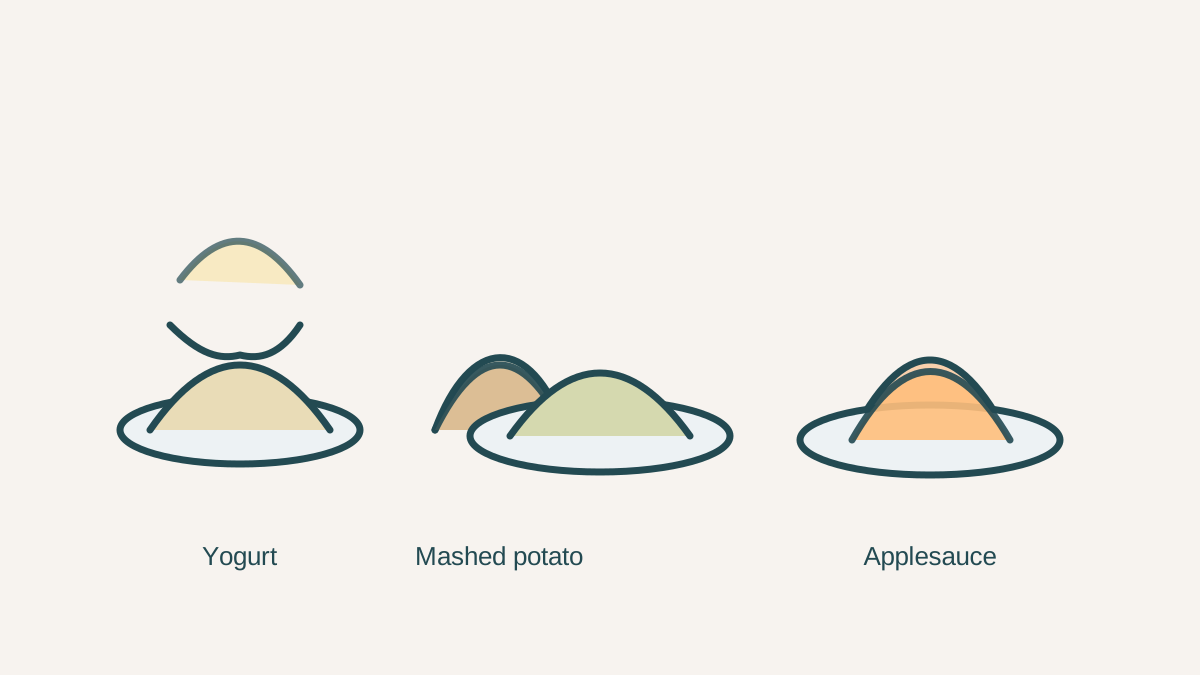
Early on, the aim is nutrition without disturbing the clot or irritating the socket. The NHS advises soft food and avoiding hard or crunchy food, alcohol, smoking and very hot drinks (NHS). Go back to your usual diet gradually as chewing becomes comfortable, usually over the first week or two. If your surgeon gave you a different schedule, follow that.
| Generally suitable | Best avoided at first |
|---|---|
| Yogurt | Nuts and seeds, which lodge in the socket |
| Mashed potatoes | Popcorn and chips |
| Smooth soup, lukewarm | Hard bread and very crusty foods |
| Applesauce | Chewy foods such as caramel or tough meat |
| Scrambled eggs | Very hot food and drinks |
| Soft oatmeal | Spicy food if it irritates |
| Mashed banana | Anything small and crumbly that can get into the socket |
| Smoothies, eaten with a spoon | Drinking through a straw |
| Soft fish, well-cooked soft vegetables | Alcohol |
Straws are avoided because the suction can contribute to losing the blood clot, and a lost clot is the mechanism behind dry socket. This is standard surgeon advice, though the evidence for suction as an independent cause is limited, so the safe approach is simply to skip them during early healing. For the same reason, spoon your smoothie.
Wisdom teeth removal aftercare: what you should and should not do
Instructions vary between surgeons, and yours take priority. These are the common elements, and the checklist below is a useful summary.
Do
- Follow the written instructions you were given.
- Bite on the gauze as directed. The NHS advises pressing on bleeding for at least 10 minutes.
- Rest for the rest of the day, with your head slightly raised when lying down.
- Use cold packs on the outside of the cheek if recommended, in short sessions.
- Drink plenty of fluids and eat soft foods.
- Keep your mouth clean. Brush your other teeth normally, and go gently around the surgical area at first.
- Rinse with warm salt water or mouthwash when your surgeon says it is safe. The NHS advises this after surgery.
- Take painkillers and any prescribed medicine exactly as directed.
Do not
- Smoke or vape. This is one of the clearest controllable risks for delayed healing and dry socket.
- Drink alcohol during early recovery, or at all while taking any medicine that interacts with it.
- Use a straw while the socket is healing.
- Spit forcefully or rinse vigorously in the first 24 hours.
- Poke the socket with your tongue, fingers or objects.
- Do strenuous exercise straight after surgery. It raises blood pressure and can restart bleeding.
- Ignore symptoms that are getting worse.
Swelling after wisdom teeth removal
Swelling is part of the body’s response to surgery. It generally starts within the first day, tends to build over the next couple of days, and then fades. Cold packs applied to the cheek in the first day or two can limit it. Some surgeons later suggest warm compresses to ease jaw stiffness, but follow your surgeon’s timing, because heat applied too early may increase swelling.
Swelling should trend downward after its peak. Contact your dentist if it keeps increasing after the first few days, is accompanied by fever, pus or a bad taste, or spreads toward the eye, neck or floor of the mouth. If swelling makes it hard to swallow or breathe, that is an emergency.
Bleeding after wisdom teeth removal
Blood-tinged saliva for the first day is normal, because a little blood in the mouth looks like more than it is. Expect gauze to be placed after the extraction. If oozing continues once it is out, fold a clean piece of gauze or a damp tea bag, place it directly over the socket and bite down firmly for at least 10 minutes without checking early; the NHS gives that 10-minute figure for pressing on bleeding (NHS). Stay upright and keep your head raised.
If bleeding keeps going after repeated firm pressure, call your surgeon or an urgent dental service. If it is heavy and uncontrolled, or you feel faint, go to emergency care.
What is dry socket?
Dry socket, or alveolar osteitis, is a complication in which the blood clot in the socket fails to form or is lost before healing is established, leaving bone and nerve endings exposed (Cleveland Clinic). The clot normally acts as a protective dressing and the scaffold for new tissue, so losing it makes the socket painful and slows early healing.
Cleveland Clinic describes worsening pain in the mouth and face two to three days after the extraction as the most common symptom. HSE says it can occur three to five days after surgery (HSE). Other features can include an empty-looking socket with visible bone, a bad taste or smell, and pain that spreads toward the ear. The distinction from normal soreness is the direction of travel: ordinary pain eases day by day, whereas dry-socket pain builds after an initial improvement and often responds poorly to ordinary painkillers.
Risk factors include smoking, a previous dry socket, and difficult extractions. In most cases a dry socket heals on its own, usually in about a week, but treatment from a dentist relieves pain sooner, which is why it is worth calling (Cleveland Clinic). Dentists typically irrigate the socket and place a medicated dressing, changing it every day or two until the pain settles. You can lower your risk by not smoking, avoiding straws and forceful spitting, and following rinsing instructions. For wisdom tooth removal specifically, one provider summary says evidence suggests antibiotics can lower the risk of infection and dry socket and that your dentist may weigh this with you (Nuffield Health); antibiotics are not given routinely to everyone.
Other possible complications of wisdom teeth removal
Most people recover without lasting problems, and Mayo Clinic says removal usually does not cause long-term complications (Mayo Clinic). It helps to separate what is common and temporary from what is uncommon.
Common and usually temporary
Pain, swelling, bruising, jaw stiffness and a little bleeding are expected effects of surgery, not complications as such. A numb lip or tongue for the hours after the anesthetic is also expected.
Less common
- Infection. The NHS notes it may need antibiotics. Signs are increasing pain and swelling, pus, a bad taste, and fever.
- Prolonged bleeding, sometimes linked to blood-thinning medicine or an underlying clotting problem.
- Dry socket, covered above.
- Nerve injury, covered next.
- Sinus communication. The roots of upper wisdom teeth can sit close to the maxillary sinus, and occasionally an opening forms between the socket and sinus. It is usually recognised by air or fluid passing between mouth and nose, and your surgeon will tell you what to avoid, such as blowing your nose forcefully, while it heals.
- Damage to neighbouring teeth or fillings, which is a recognised risk when instruments work close to the second molar.
- Delayed healing, more likely in smokers and with some medical conditions.
Rare
A fractured jaw is a rare complication that is mainly a concern with deeply impacted lower teeth, especially in older patients with significant bone loss. Surgeons discuss it when the X-ray suggests the risk is relevant to you; it should not discourage treatment that is indicated.
Nerve damage and numbness after wisdom teeth removal
Two nerves matter in the lower jaw. The inferior alveolar nerve runs in a canal beneath the lower molars and supplies feeling to the lower lip and chin. The lingual nerve supplies feeling to the tongue and runs close to the inside surface of the jaw near the wisdom tooth. The roots of an impacted lower wisdom tooth can lie against these structures, which is why surgeons study the X-ray carefully.
HSE says the nerve can be injured during removal, that in most cases the damage is temporary, lasting weeks or months, and that it can be permanent if the nerve is severely damaged (HSE). The NHS likewise says the numbness or tingling usually improves but can last weeks or months (NHS). Injury is not inevitable, and the surgeon should explain how likely it is in your case before you consent.
If imaging shows the roots are very close to the nerve, a surgeon may discuss a coronectomy, which removes the crown and leaves the roots in place to avoid disturbing the nerve. An NHS hospital patient leaflet describes this option for teeth very close to the nerve, and notes that it carries a risk of further infection or pain that may need a second operation (University Hospitals of Leicester). Report any numbness or altered sensation that is still present beyond the expected anesthetic period.
Wisdom teeth removal cost
There is no honest single price, because it depends on where you live and how the care is funded. In some countries part of the cost is covered by public or insurance schemes, and in others it is paid privately. The main factors are:
- Country and city, and whether you are treated publicly or privately.
- Whether the extraction is simple or surgical.
- How many teeth are removed.
- The type of anesthesia, with sedation and general anesthesia costing more than local alone.
- Imaging, from a standard X-ray to a CBCT scan.
- The surgeon’s qualifications and experience.
- Clinic or hospital facility charges.
- Follow-up appointments and any aftercare supplies.
Ask your local provider for an itemised written estimate that separates the surgeon’s fee, anesthesia, imaging and facility charges, and check with your insurer or public health service what is covered before booking.
Wisdom teeth removal at different ages
Age shapes how surgery goes, but it does not set a deadline. AAOMS materials say removal is easier in younger patients because the roots are not fully formed and the bone is softer, and that morbidity and the risk of complications increase with age (AAOMS). That is a reason to make an informed decision early, not a reason to remove every tooth by a certain age.
- Teenagers. The teeth are still developing. A dentist may monitor them with X-rays and plan ahead, but a tooth that is developing well and has room does not need to come out.
- Young adults. This is when most problems and most decisions arise. Roots are often incomplete, which tends to make surgery easier.
- Adults over 25. Roots are fully formed and bone is denser, so teeth that are impacted may be harder to remove. Healthy, accessible teeth can still be kept.
- Older adults. Mayo Clinic notes that older adults may find surgery harder and have a higher risk of complications. Removal is generally reserved for teeth with a clear problem, and general health, medicines and bone health enter the decision.
Can you keep your wisdom teeth?
Yes, in the right circumstances. AAOMS says wisdom teeth that are completely erupted and functional, painless, cavity-free, surrounded by healthy gum, and disease-free may not need extraction, but that they do need regular professional examination (AAOMS patient guide). The NHS likewise leaves symptom-free teeth in place and monitors them at routine check-ups.
The difficulty is that wisdom teeth are at the back, and brushing and flossing there are awkward. Partially erupted teeth in particular collect plaque, and decay or gum disease can develop without much warning. If you keep them, clean them with the same care as any molar, attend regular examinations, and expect to have the X-rays your dentist advises. Extraction may become necessary later if a tooth decays, a gum pocket forms, or the second molar is threatened.
Frequently asked questions about wisdom teeth removal
Is wisdom teeth removal painful?
You should not feel sharp pain during the procedure because of the anesthetic, though you will feel pressure. Soreness afterwards is expected and usually manageable with painkillers.
How long does wisdom teeth removal take?
The NHS says it often takes just a few minutes and should take no more than 40 minutes. Complex or multiple extractions take longer.
How many days does recovery take?
It varies. Guy’s and St Thomas’ gives an average of 3 to 7 days, while the NHS and HSE describe symptoms settling over up to two weeks. Complex surgery usually takes longer.
Can I remove all four wisdom teeth at once?
Often yes, and many people prefer one recovery period. Whether it suits you depends on the difficulty of each tooth, the anesthesia plan and your health. Your surgeon may recommend doing them in stages.
Can I go to work the next day?
The NHS says most people can return to normal activities the next day, but after a difficult extraction or general anaesthetic you may need 1 to 3 days off.
Can I brush my teeth after surgery?
Yes, but gently, and avoid the surgical site at first. Ask your surgeon when to start cleaning near the socket and whether to use a rinse.
When can I drink coffee?
The NHS advises avoiding very hot drinks, so let it cool to lukewarm and skip the straw. Some surgeons suggest waiting a day or so; follow your own instructions.
When can I eat solid foods?
Gradually, as chewing becomes comfortable, often over the first week or two. Start with soft foods and add firmer ones back, avoiding small hard pieces until the socket has closed.
Can I sleep normally after wisdom teeth removal?
Yes, but keep your head raised on an extra pillow for the first night or two to limit swelling, and put a towel on the pillow in case of oozing.
Can wisdom teeth grow back?
A removed tooth does not grow back. Rarely, a person has an extra tooth (a supernumerary tooth) in the same area, or a piece of root left behind, which can be mistaken for regrowth.
Does everyone need wisdom teeth removal?
No. See above. Professional bodies disagree about healthy impacted teeth, and many people keep theirs without problems.
What happens if I never remove impacted wisdom teeth?
Some never cause trouble. Others lead to infection, decay in the neighbouring molar, gum disease or cysts. AAOMS cites a long-term study suggesting a high rate of eventual disease, while NICE and Cochrane find the evidence for preventive removal inadequate. Regular monitoring is the usual compromise.
Can wisdom teeth cause headaches?
An infected or inflamed wisdom tooth, or clenching related to jaw tension, can contribute to headaches or jaw pain. Many headaches have unrelated causes, so a dental assessment is the way to find out.
Can wisdom teeth cause ear pain?
Yes. Pain from the lower jaw can be felt in the ear, because nearby nerves share pathways. Ear pain can also come from the ear itself or the jaw joint.
When can I exercise again?
Avoid strenuous exercise straight after surgery because it can restart bleeding and increase swelling. Gentle walking is usually fine after a day or two; return to harder training when your surgeon agrees and you feel comfortable.
When can I smoke again?
The NHS advises not smoking after removal. The longer you can stay off cigarettes and vapes the lower the risk of dry socket and delayed healing, and a pharmacist or your dentist can help you use the break to quit.
What does dry socket feel like?
A deep, throbbing ache that grows two to five days after surgery after an early improvement, sometimes spreading to the ear, often with a bad taste or smell, and that painkillers do not control well.
When should I contact my dentist?
See the safety section for the full list: worsening pain or swelling, fever, pus, uncontrolled bleeding, persistent numbness, or worsening difficulty opening.
Can I drink water after surgery?
Yes, and you should keep drinking. Sip from a cup, not a straw, and avoid swishing hard.
Is wisdom teeth removal considered major surgery?
It is oral surgery, usually done as a day case under local anesthetic. A deeply impacted tooth under general anesthetic is a bigger procedure than a simple extraction. Most people go home the same day.
When to contact your dentist or seek emergency care
The NHS advises seeking urgent help for bleeding that will not stop, severe or worsening pain and swelling that painkillers are not helping, or pain with a bad taste, a high temperature or feeling unwell (NHS). Contact your dental surgeon, or an urgent dental service, for:
- Pain that is getting worse instead of better.
- Swelling that persists or increases.
- Fever.
- Pus or other signs of infection.
- A bad taste that persists, particularly with other symptoms.
- Bleeding that does not stop with the recommended pressure.
- New or persistent numbness.
- Difficulty opening your mouth that is getting worse.
Seek emergency medical care straight away for difficulty breathing or swallowing, swelling that is spreading quickly, or severe bleeding you cannot control. This page cannot assess your situation; if you are unsure, call your dentist or local emergency number.
References
- NHS. Wisdom tooth removal: what happens.
- Mayo Clinic. Wisdom tooth extraction.
- Cleveland Clinic. Dry socket.
- American Association of Oral and Maxillofacial Surgeons. Evidence-based management of third molar teeth.
- AAOMS. Wisdom teeth patient guide (hosted by University of Washington School of Dentistry).
- AAOMS. Wisdom teeth management.
- NICE. Guidance on the extraction of wisdom teeth (TA1), 2000.
- Mettes TG et al. Surgical removal versus retention for the management of asymptomatic impacted wisdom teeth. Cochrane Database of Systematic Reviews.
- Hounsome J et al. Prophylactic removal of impacted mandibular third molars: a systematic review and economic evaluation. Health Technology Assessment 2020;24(30).
- NIHR HTA Programme. Prophylactic removal of impacted third molars: protocol, 2016.
- Health Service Executive (Ireland). Wisdom tooth removal: recovery.
- Guy’s and St Thomas’ NHS Foundation Trust. Recovering from wisdom tooth surgery.
- University Hospitals of Leicester NHS Trust. Having a wisdom tooth removed under general anaesthetic.
- NHS Planned Care. Surgical removal of wisdom tooth (patient leaflet).
- NICE. Prophylactic removal of impacted third molars: final scope.
- Nuffield Health. Tooth removal (extraction).